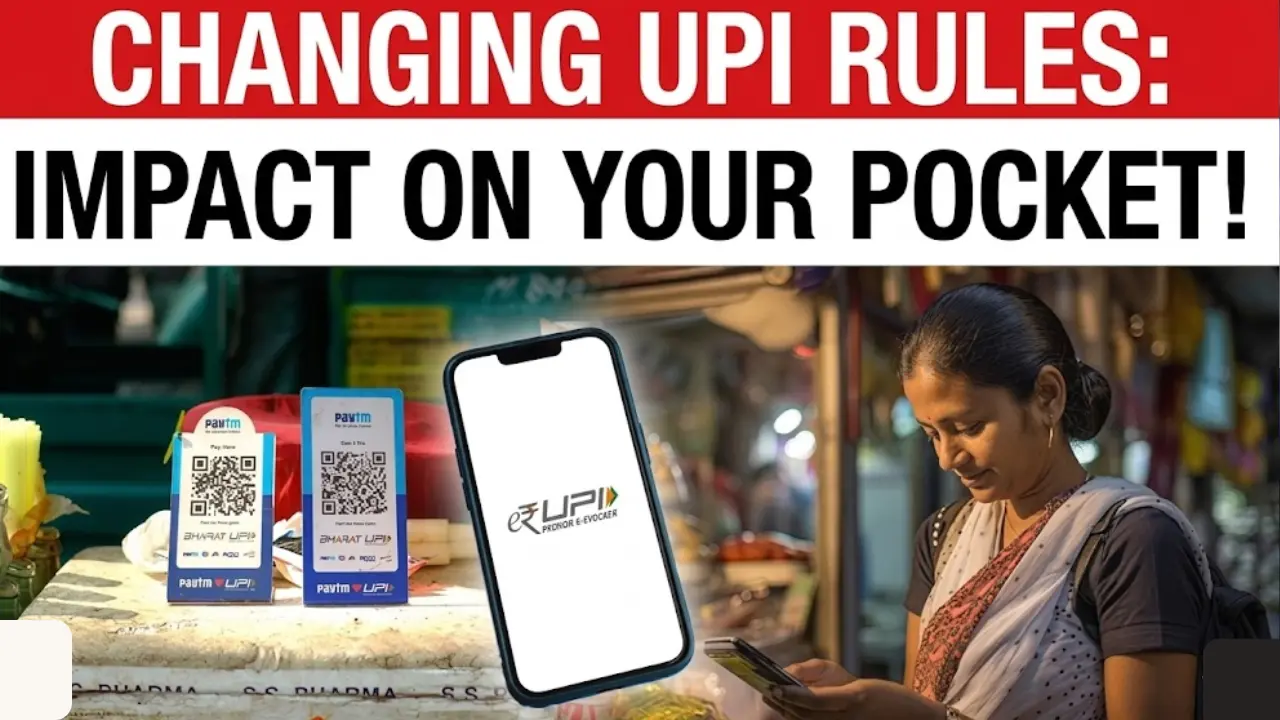
UPI India’s digital payment ecosystem, powered by Unified Payments Interface (UPI), continues to evolve as millions of users rely on it daily for quick and seamless money transfers. From buying groceries to paying rent, UPI has become an essential part of everyday life. In 2026, a new update has been introduced that brings slight changes to how certain transactions are handled, especially those above ₹2000. While many people initially assumed that all large payments would now attract charges, the actual rule is more selective and user-friendly. The update mainly focuses on maintaining the long-term sustainability of the digital payments system without affecting most everyday users.
Complete Information Table
| Topic | Details |
|---|---|
| System Name | Unified Payments Interface (UPI) |
| New Rule | Charges on select transactions above ₹2000 |
| Applies To | Wallet-to-merchant payments |
| Not Applicable | Bank-to-bank UPI transfers |
| Fee Type | Small interchange fee |
| Impact on Users | Minimal for regular usage |
| Impact on Merchants | Possible cost adjustments |
| Reason for Change | Sustainability and infrastructure costs |
| Future Outlook | Continued growth with improved services |
Understanding Charges on Transactions Above ₹2000
The new framework introduces a small interchange fee, but it does not apply to every transaction above ₹2000. Instead, it is limited to specific types of payments, particularly those made using prepaid instruments like digital wallets. When users transfer money directly from one bank account to another using UPI, there is generally no additional charge, regardless of the amount. This means that sending money to friends, family, or even merchants directly from a bank account remains free in most situations. The fee structure has been designed in a way that avoids burdening regular users while still addressing operational costs.
Wallet-Based Payments and Where Fees Apply
The key distinction in the new rules lies in how the payment is made. If a user pays a merchant using wallet balance for an amount above ₹2000, a small fee may be applied. However, if the same payment is made directly through a linked bank account using a UPI app, no charge is typically involved. This difference is important because it clears the confusion that all high-value transactions are now chargeable. In reality, only wallet-to-merchant payments fall under this category, making the impact quite limited for most users.
Why These Changes Were Introduced
As digital payments in India continue to grow rapidly, maintaining the infrastructure behind UPI has become more complex and costly. Payment providers invest heavily in security systems, server capacity, and real-time processing technologies to ensure smooth transactions. Earlier, most UPI services were offered completely free, supported by incentives and subsidies. However, sustaining such a model at a massive scale has become challenging. The introduction of selective fees helps create a balanced system where service providers can recover some costs without affecting the majority of transactions.
Impact on Everyday Users
For regular users, the impact of these changes is expected to be minimal. Most daily transactions, such as paying for food delivery, transportation, or small shopping expenses, are usually below ₹2000 and remain unaffected. Even for larger payments, users can avoid charges simply by choosing bank-to-bank transfers instead of wallets. This ensures that UPI continues to remain a cost-effective and convenient option for the majority of people across the country.
Real-Life Example of How It Works
Consider a situation where a person pays ₹10,000 as rent using a UPI app linked directly to their bank account. In this case, no fee is typically applied. On the other hand, if the same payment is made using a digital wallet balance and processed as a merchant transaction, a small interchange fee may be charged. This example highlights how the mode of payment plays a crucial role in determining whether any extra cost is involved.
How Merchants May Be Affected
While customers may not feel much difference, small businesses and merchants could experience some impact due to the new fee structure. Merchants operating on low profit margins might adjust their pricing or encourage customers to use bank-based UPI payments instead of wallets. Some businesses may choose to absorb the cost to maintain customer convenience, especially in competitive markets. Larger retailers, however, are already familiar with digital payment charges and may find it easier to adapt.
The Bigger Picture of UPI Growth
Despite the introduction of selective fees, the growth of UPI remains strong. The system continues to handle billions of transactions every month, making it one of the most widely used digital payment platforms in the world. Its simplicity, speed, and accessibility have made it popular across both urban and rural areas. These new rules are part of a broader effort to ensure that the system remains reliable and sustainable as usage continues to expand.
What the Future Looks Like for Digital Payments
Looking ahead, digital payment platforms may introduce new features, offers, or cashback benefits to keep users engaged. Payment providers could also invest more in fraud detection and faster processing systems using the additional revenue generated from selective fees. While some users may initially be concerned about added costs, the overall structure ensures that most transactions remain free. UPI is expected to continue dominating India’s digital payment landscape due to its unmatched convenience and widespread acceptance.