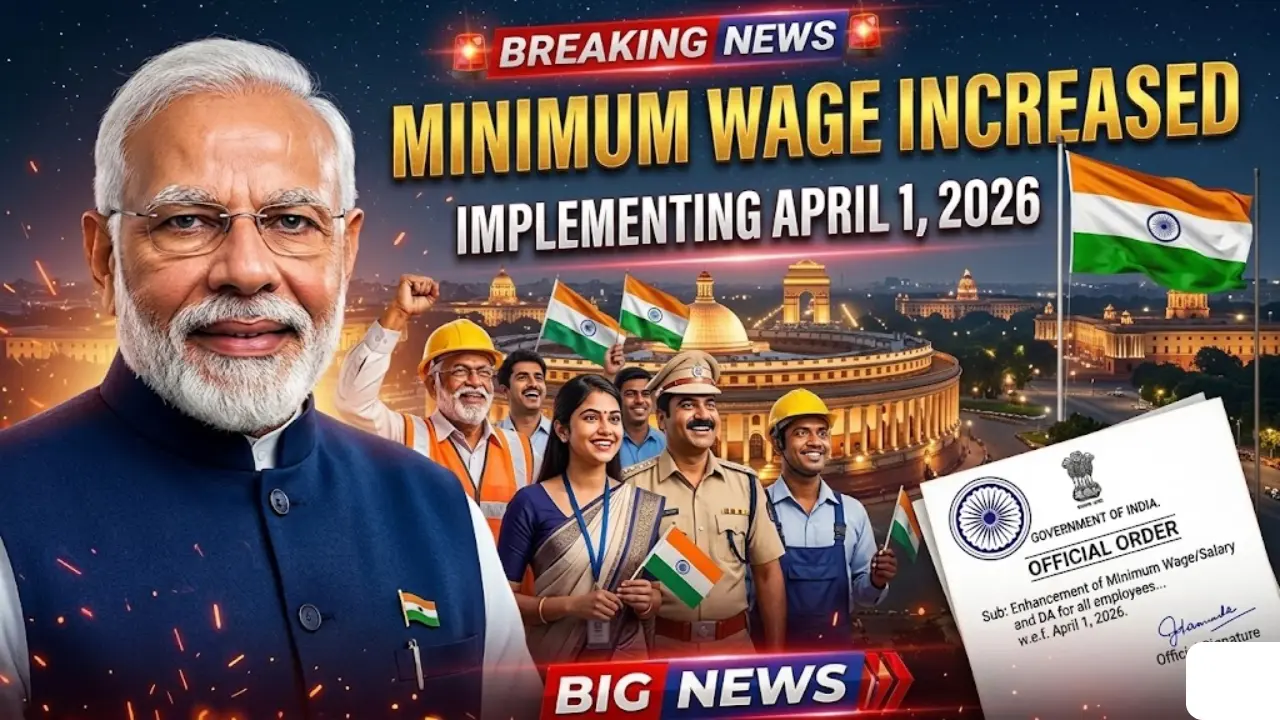
Minimum Wage The year 2026 could mark a turning point for millions of workers across India, as the government prepares to introduce significant updates to minimum wages and labour laws. These expected changes, likely to come into effect from April 1, 2026, aim to improve income levels, strengthen worker rights, and expand social security coverage. With rising living costs and evolving job structures, these reforms are designed to bring more stability and fairness into the lives of workers, especially those in lower-income and informal sectors.
Full Information Table
| Category | Details |
|---|---|
| Implementation Date | Expected from April 1, 2026 |
| Minimum Daily Wage (Old) | ₹178 – ₹350 |
| Minimum Daily Wage (Proposed) | ₹783 – ₹850 |
| Monthly Salary (Unskilled) | ₹20,000 – ₹22,000 |
| Monthly Salary (Skilled) | ₹25,000+ |
| Monthly Salary (Highly Skilled) | Up to ₹29,000 |
| Work Hours | 48 hours per week |
| Overtime Rule | Double payment beyond 48 hours |
| Wage Rule | Basic salary ≥ 50% of total pay |
| Social Security | Extended to gig & unorganized workers |
| Registration Platform | e-Shram Portal |
| Penalty for Violations | ₹50,000 – ₹1 lakh + possible jail |
A Major Increase in Minimum Wages
One of the most talked-about proposals is the substantial rise in minimum wages. Previously, daily wages ranged roughly between ₹178 and ₹350, depending on the type of work and region. Under the new proposal, this could increase to approximately ₹783 to ₹850 per day. This shift is expected to significantly improve workers’ earnings, enabling them to better manage household expenses such as food, rent, education, and healthcare. In the context of inflation and rising costs of living, this increase is being seen as both timely and necessary.
New Labour Codes and Stronger Worker Rights
The government is also planning to implement updated labour regulations under structured frameworks that address wages, industrial relations, workplace safety, and social security. These reforms fall under broader initiatives led by the Ministry of Labour and Employment, aiming to create a more transparent and balanced system for both employees and employers. Workers are expected to benefit from clearer policies, improved safety standards, and better enforcement of rights, while employers will have more defined compliance guidelines.
The Impact of the 50 Percent Wage Rule
Another key feature of the proposed reforms is the rule that mandates basic salary to be at least 50 percent of the total compensation. This change directly affects how salaries are structured. With a higher basic pay component, contributions to provident funds and gratuity calculations will increase. Over time, this can lead to stronger financial security after retirement, ensuring that workers benefit not just in the present but also in the long term.
Expected Changes in Salary Structure
The revised wage framework could bring noticeable changes in monthly earnings across different skill categories. Unskilled workers may earn between ₹20,000 and ₹22,000 per month, while skilled workers could see salaries of ₹25,000 or more. Highly skilled workers may earn up to ₹29,000 monthly. These estimates indicate a clear effort to uplift income levels and improve overall living standards, particularly for those who have traditionally been underpaid.
Working Hours and Overtime Clarity
The reforms also bring more clarity to working hours and overtime rules. A standard workweek is expected to be capped at 48 hours. Any work beyond this limit would qualify as overtime, with workers entitled to receive double their regular pay. This ensures that employees are fairly compensated for extra effort and helps prevent exploitation through excessive working hours.
Expanding Social Security Coverage
A major highlight of the upcoming changes is the expansion of social security benefits to include workers from the unorganized sector. This includes gig workers, delivery personnel, app-based drivers, and construction workers. Platforms like the e-Shram Portal are being used to register workers and build a comprehensive database. With this, workers may gain access to insurance, pension schemes, and other welfare benefits, offering them a more secure future.
Digital Payments and Grievance Systems
To improve transparency and efficiency, the government is encouraging digital wage payments. This reduces delays and ensures that workers receive their salaries directly into their bank accounts. Additionally, online grievance systems are being introduced so workers can easily report issues related to wages, workplace conditions, or unfair treatment. These systems aim to make dispute resolution faster and more accessible.
Strict Penalties for Rule Violations
Employers who fail to comply with the new regulations may face strict penalties. Fines could range from ₹50,000 to ₹1 lakh, and in severe cases, there may even be provisions for imprisonment. These measures are intended to ensure that labour laws are taken seriously and that workers are protected from unfair practices.
What This Means for the Future
Overall, the Labour Minimum Wages 2026 reforms have the potential to bring meaningful improvements to workers’ lives. Higher wages, better rights, and expanded social security can contribute to a more balanced and equitable workforce. However, it is important to note that these proposals will only take full effect after official government notifications are issued. Workers and employers alike should stay informed and prepared for these upcoming changes.